
ROLE
Product Designer
TEAm
1 Designer
1 Engineer
tools
UXR & Testing, Wireframing, Prototyping,
Visual & Interaction Design, Product Thinking
tools
Duration
Jun -
Jul 2025
CONTEXT → PROBLEM
We need more musicians to mix "oil with water"
I stumbled across Yousuke Yukimatsu's Boiler Room set one night. He was mixing tracks from completely different genres and cultures in ways that shouldn't work but somehow did. One comment said "this man could mix oil and water."
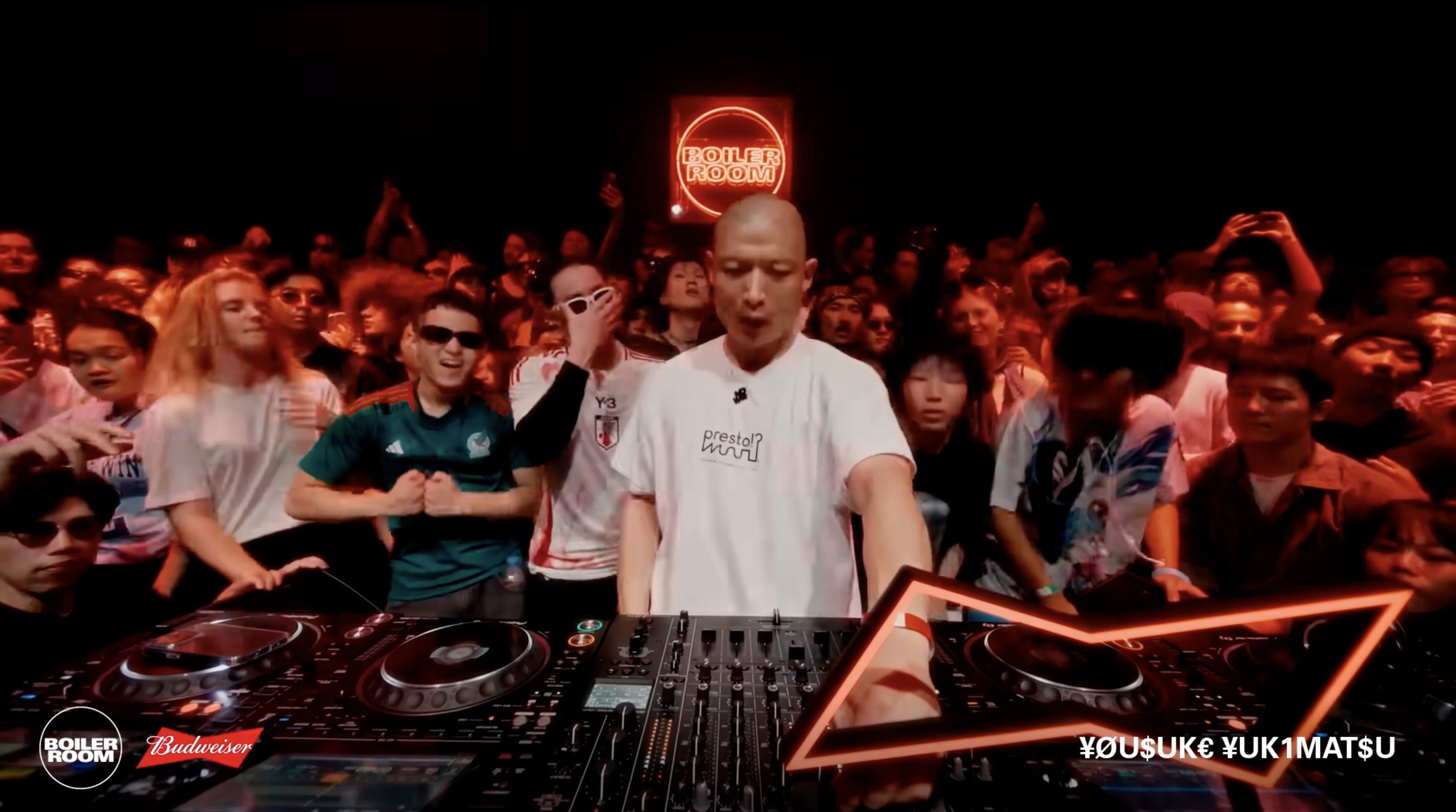
Yousuke Yukimatsu's Legendary DJ Set
When I kept scrolling through comments, I saw tons of people saying:
I wish I could collaborate with people like this, but I don't even know where to start.
How do you even communicate musical ideas across cultures?
That got me thinking: here's this DJ showing how amazing cross-cultural music can be, but why is it so hard for regular musicians to create together across cultures?
After digging deeper, I realized the problems went way beyond just language barriers:
Lost in Translation:
Musicians struggle to explain their creative vision across cultures
Time Zone Nightmares:
Real-time collaboration is nearly impossible across continents
Platforms Don't Get Culture:
Most existing tools are built for Western music theory only
USER RESEARCH + COMPETITIVE ANALYSIS
Indulge with niche music communities
To approach the design process, I wanted to get a better grasp on how musicians explore different music cultures. Here are the three main sources I used.
Day 1: I launched a quick Google Form survey through social media and Discord, asking if people had ever tried collaborating with musicians abroad and what went wrong.
Day 2: I shifted to more personal conversations. I reached out to four friends in music production for short, informal calls. These quick chats added richer context to the survey, uncovering not just the problems but also the feelings behind them.
Analyzing Competitors
I also looked at existing music collaboration platforms and community discussions to understand where current tools fall short.
Bandlab:
Limited organization, weak version control, and poor support for complex collaborations

Splice:
Reviews frequently note the lack of real-time collaboration, minimal communication tools, and reliance on indirect file-based workflows
Reddit:
Musicians consistently complain about poor communication, mismatched commitment levels, unclear creative direction
Common patterns
After 10 cohesive survey results and 4 interviews with friends who work in music, here’s some common patterns I saw:
“I kept saying I wanted the track to feel bouncy, but my collaborator kept sending back these rigid classical takes. Turns out words like that don’t always translate across cultures.”
“By the time I was done with work, it was already 1 AM for my collaborator. We tried to make it work, but the time zones just killed the momentum.”
“I don’t just want samples, I want to understand the story behind the music, so I can better understand the perspective of my collaborator."
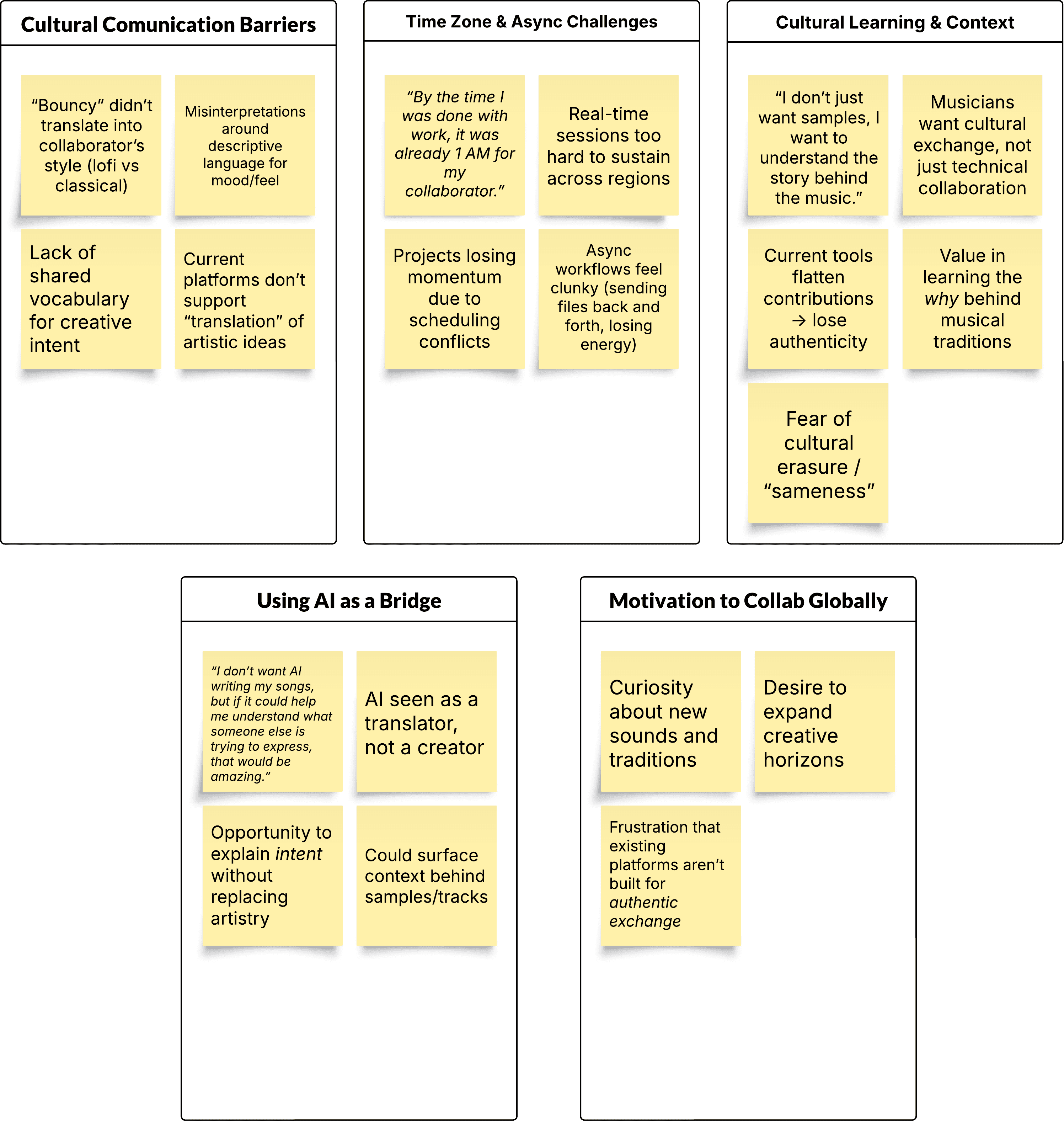
I narrowed it down to three core focus areas that can be built out as the project grows:
Focus Area 01
Cultural Communication Barriers
Musicians need help translating creative intent
across cultures
Focus Area 02
Asynchronous Challenges
Time zones make real-time work impossible
Focus Area 03
Cultural Learning Desire
Musicians want to respect and
understand other traditions to better
connect with collaborators.
IDEATION
Time to Brainstorm!
How might we help musicians from different cultures collaborate authentically while preserving what makes their musical traditions unique, even when they can't be online at the same time?
This question became my north star. Every design decision had to solve for cultural authenticity, asynchronous collaboration, and creative communication barriers.
The Core Idea
Working with my engineering friends who have OpenAI API experience, we mapped out technical architecture for Insync's core AI features using a multi-layered approach to cultural music understanding.
So I designed 2 interconnected features that directly address each challenge:
Cultural Matching System: Addresses "preserving musical traditions" by connecting musicians based on how their unique styles could complement each other
Async-First Collaboration Studio: Tackles "can't be online at the same time" by preserving creative conversation flow even when working hours apart
Instead of trying to make everyone sound the same, I wanted Insync to celebrate musical differences and use AI to help musicians understand and build on each other's cultural styles.
Exploring key Ideas
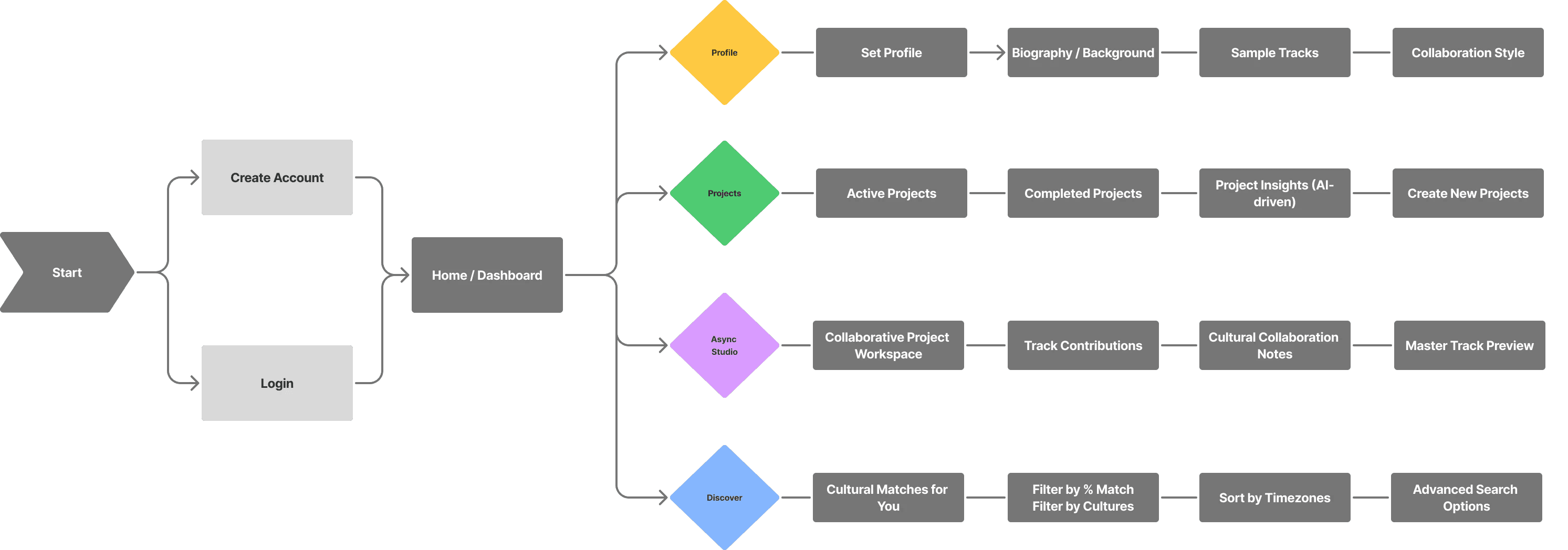
I created the first information architecture to set the stage for Insync's foundation.
ITERATION → USABILITY TESTING
Designing with our HMW as the constant filter
Throughout design iterations, I constantly tested each interface decision against the HMW and user research, asking:
Does this help cross-cultural collaboration?
Does this work asynchronously?
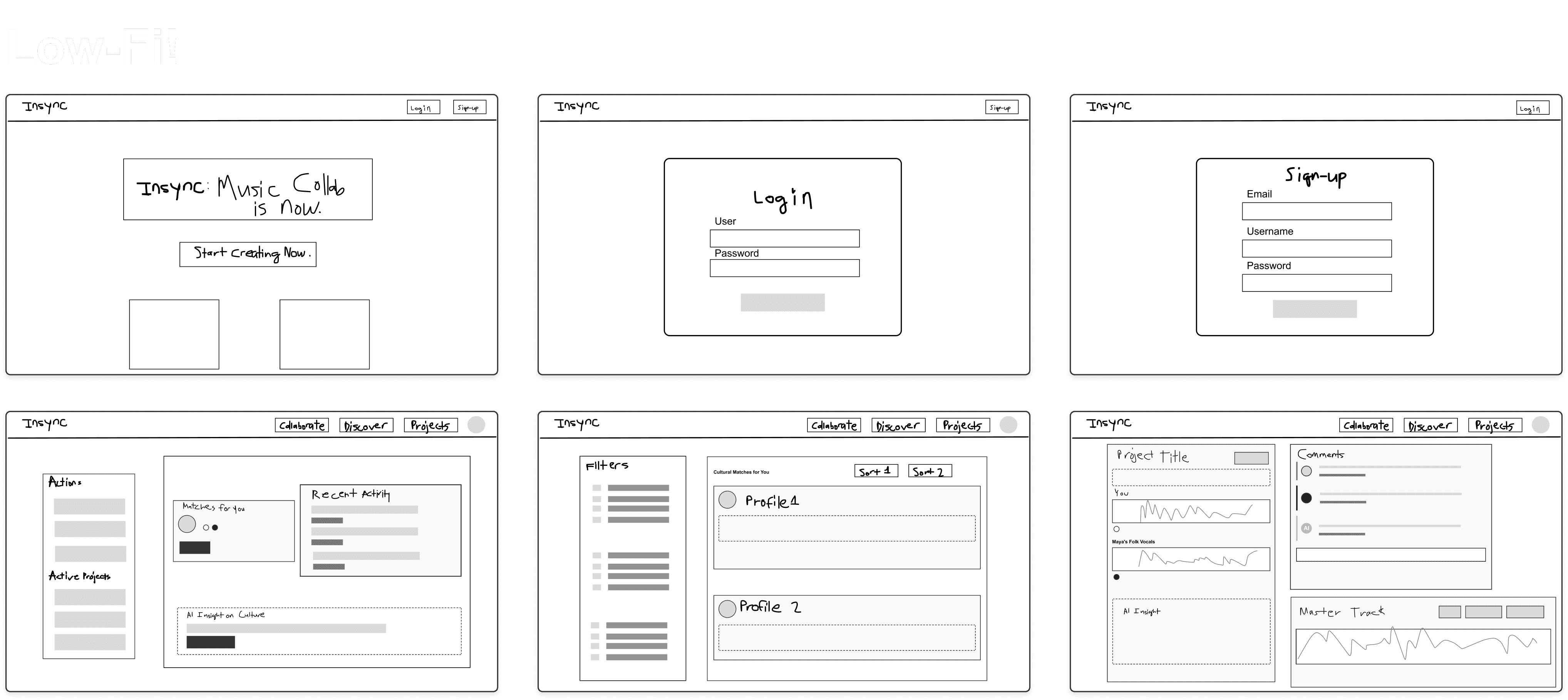
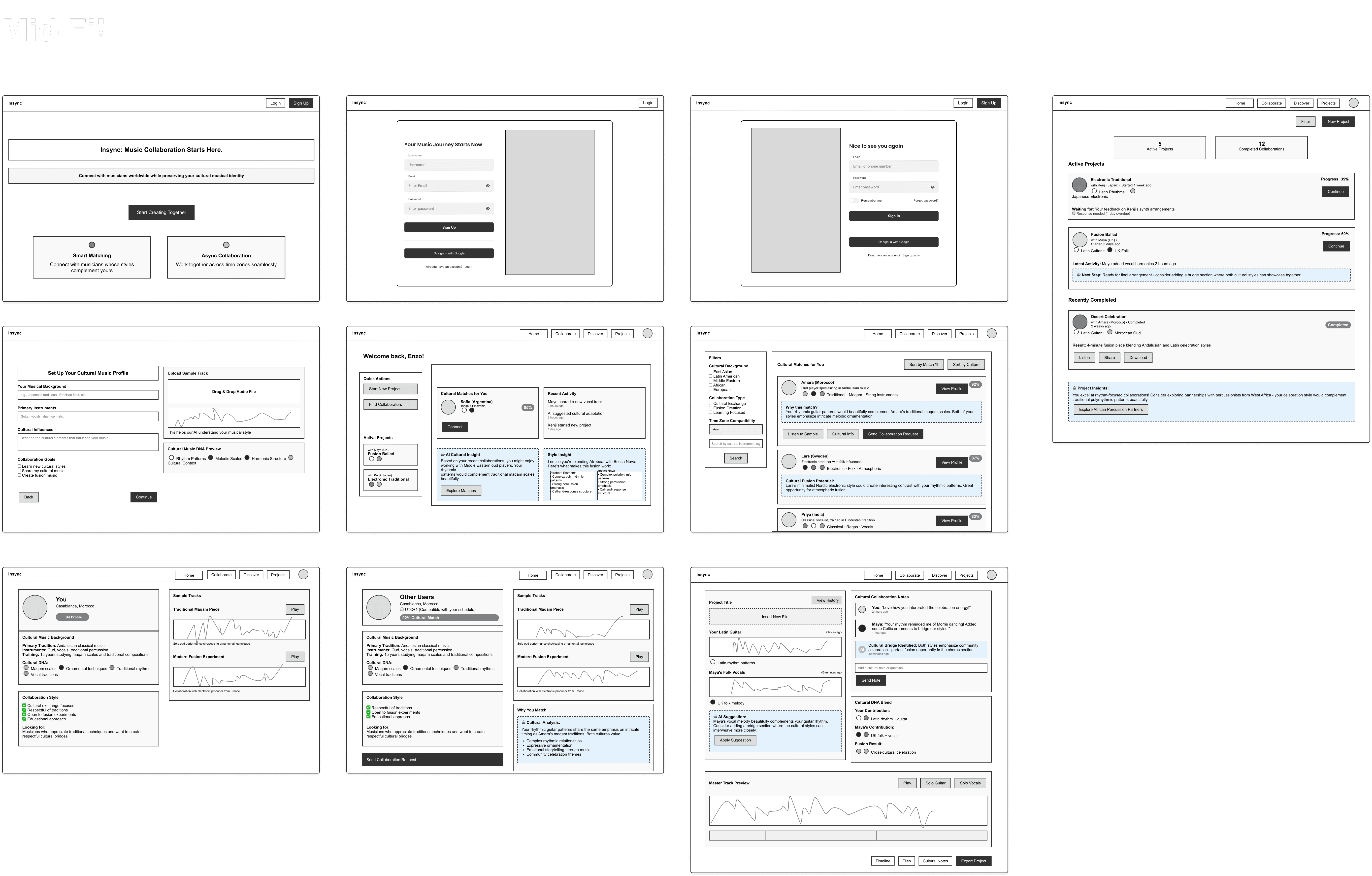
In need of revisions: What makes a design actually result in impact?
Before advancing to high-fidelity, I conducted mid-fidelity usability testing with 4 musicians from diverse cultural backgrounds. While participants validated the core concept, they revealed critical execution gaps:
FINAL DESIGN
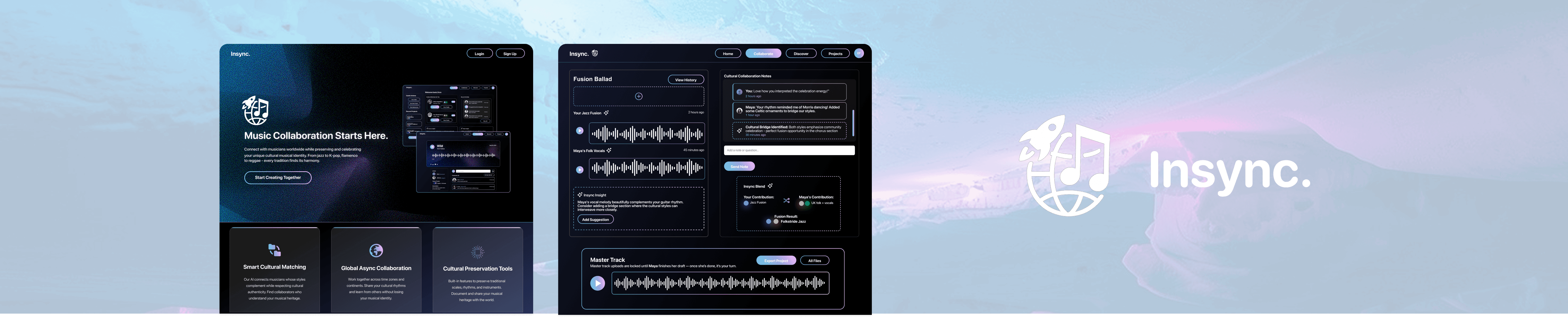
Meet Insync!
After showing the final iteration to my musically inclined friends and interviewees, they were impressed with the results. They emphasized the collaborative nature of the platform, highlighting features that enabled them to discover and connect with people from around the world they never would have expected to meet.
Cross-Cultural
Insync connects you with musicians worldwide and shows you exactly how your musical styles could complement each other through intelligent compatibility matching.
Async Studio
Never lose creative flow due to time zones again. Async Studio preserves the natural conversation of musical collaboration, whether you're working together or hours apart.
REFLECTION
Creativity needs empathy
The biggest lesson I learned was that great design isn't just about making things look good. It's about understanding and respecting the humans who will use what you create. Working on cross-cultural collaboration forced me to question my assumptions about "universal" design and think more deeply about inclusive experiences that celebrate differences rather than erasing them.
Why this project matters
This project pushed me to think beyond typical user personas and consider cultural sensitivity in tech design. It showed me how AI can enhance human creativity rather than replace it. Social media platforms have democratized music discovery globally, but collaboration tools haven't evolved to support the exchange that musicians actually want.
A little too determined
Real-world projects rarely follow a linear process, and building a platform to connect music cultures from around the world is no exception. Looking back, I'm proud of what I accomplished, but I could've pushed the UI aspect further to make the experience more engaging and polished. This was a solo project, and balancing everything was a challenge, but it taught me a lot about prioritization and problem-solving.
Moving Forward...
Visual Music Communication
Incorporating more visual ways to communicate musical ideas across language barriers, possibly through gesture recognition or visual music notation systems.
Community & Cultural Authenticity
Building more social features and community moderation and cultural consultant networks to ensure the platform always respects and accurately represents different musical traditions.